Tag Archives: marketsmuse

Sell This Rumor: Hedge Funds Exploit ETF Ecosystem

The battle between business news pontificaters across the 4th estate is in full season, as evidenced by a smart article yesterday by Bloomberg LP’s Eric Balchunas and suggests that MarketsMuse curators are apparently not the only topic experts who noticed and took aim at a recent WSJ article that proclaimed savvy hedge fund types are increasingly exploiting exchange-traded funds by arbitraging price anomalies between the underlying constituents and the ETF cash product that occur in volatile moments.

That original WSJ article, “Traders Seek Ways to benefit from ETF woes …At the Expense of Investors” was misleading, and as noted by MarketsMuse Sept 30 op-ed reply to the WSJ piece, one long time ETF expert asserted that WSJ’s conclusions was “much ado about nothing.” Bloomberg’s Balchunas has since reached a similar conclusion; below are extracted observations from his Oct 12 column..

Hedge funds may need to get back to the drawing board if they’re planning to turn around their performance struggles by capitalizing on “shortcomings in the ETFs’ structure” via some unusual trade ideas, as highlighted in this recent Wall Street Journal article. Most funds do nothing of the sort.

Eric Balchunas, Bloomberg LP
Eric Balchunas Bloomberg LP

The vast majority of ETF usage by hedge funds is very boring. They love to short ETFs to get their hedge on and isolate some kind of risk. For example, they may short the Health Care Select Sector SPDR ETF (XLV) and then make a bet on one of the health-care stocks in the basket in order to quarantine a single security bet. Hedge funds have about $116 billion worth of ETF shares shorted, compared with only $34 billion in long positions, according to data compiled by Goldman Sachs last year.

The $34 billion in long positions is them using ETFs like everyone else — as a way to get quick and convenient exposure to a particular market. For example, the world’s largest hedge fund, Bridgewater Associates, has a $4 billion position in the Vanguard FTSE Emerging Markets ETF (VWO), which it has held for six years now.  There’s also Paulson & Co.’s famous $1 billion position in SPDR Gold Trust (GLD), which it has been holding for almost seven years. Like anyone else, they like the cheap exposure and liquidity VWO and GLD serve up.

With that context in place, yes, there are a tiny minority of hedge funds that engage in some complex trades like the ones highlighted in the article. But each trade comes with at least one big problem.

Before anyone tries any of these at home, it’s important to deconstruct them.

Trade #1: Robbing Grandma

How it works: During a major selloff, try and scoop up shares at discounted prices put in by small investors using market orders.

The problem: It’s super rare. Aug. 24, which saw hundreds of ETFs trade at sharp discounts amid a major selloff, was basically an anomaly. At best, a day like that happens once every two years. Thus, to capitalize on discounts of the 20-30 percent variety is like standing on a beach waiting for a hurricane to hit. And you won’t be the only one, so you may wait two years only to find you can’t get your order filled on the day the big one hits. In addition, no large institutional investors are putting in market orders. So this low-hanging fruit is sell orders for tiny amounts put in by unknowing small investors. Essentially this is the white-collar equivalent of robbing Grandma for some loose change in her purse.

Moreover, Aug. 24 may never happen again, at least the way it unfolded. ETF issuers are working with the exchanges, the regulators, and the market makers — and even making significant recommendations — to make sure those kinds of small investors aren’t exposed again like that.

It should be noted, though, that arbitrage between the ETF price and the value of the holdings happens day in and day out with ETFs — that’s how ETFs work. They rely on a network of market makers and authorized participants to arbitrage away the discrepancy between the ETF’s underlyings and its net asset value (NAV).

Trade #2: The Double Short

To continue reading the straight scoop from Bloomberg columnist Eric Balchunas, click here

This BrokerDealer Continues to Help Lead The Way

MarketsMuse extends a warm salute to the nation’s oldest and largest minority brokerdealer owned and operated by service-disabled military veterans in connection with the following news announcement..

Oct 5 2015–Stamford, CT and Newport Beach CA–Mischler Financial Group, Inc., the financial industry’s oldest and largest institutional brokerage and investment bank owned and operated by Service-Disabled Veterans is pleased to have served as a Silver Sponsor for the 2015 Army Ranger Lead The Way Fund Gala. Silver Sponsors contributed a minimum of $25,000; proceeds to

Mischler Rates Trader Glen Capelo (l), Duke University Coach K Krzyzewski (c) Mischler CEO Dean Chamberlain (r)

are dedicated to support service-disabled US Army Rangers and the families of Rangers who have died, have been injured or currently serving in harm’s way around the world.

This year’s annual gala took place September 30 at New York’s Chelsea Piers and NBC News Anchor Tom Brokaw served as Master of Ceremonies. The 2015 Lead The Way event paid tribute to 5-time NCAA champion and college basketball legend Mike “Coach K” Krzyzewski, a US Military Academy at West Point Graduate (USMA ’69) and a former classmate of Mischler’s Founder and Chairman Walt Mischler. Coach K served two tours of duty prior to his career as a world famous university basketball coach.

Mischler Financial’s VP of Capital Markets Robert MacLean (USMA ’02), who served seven years as a US Army Ranger and is a two-time recipient of the Bronze Star, served as a member of this year’s Lead The Way Fund Host Committee. MacLean shared that honor with a short list of military veterans who have since forged a path on Wall Street at firms that include among others, Goldman Sachs, JPMorgan, UBS, Credit Suisse, Barclays, and Fortress Investment Group.

For the full story, please click here

Classic Counter-Trend Tuesday; You Date Equities But Marry Credit

“To put it bluntly, what headline writers or traders are selling you today is a load of bollocks.” Neil Azous, Rareview Macro LLC

When global macro guru Neil Azous of Rareview Macro appeared on CNBC midday yesterday, MarketsMuse curators had already absorbed and relayed his recent views about energy prices, as well as his relatively rare (and sober) view as to the mid-term outlook for equities. When he opined late last night, “You date equities, but you marry credit..” via his Twitter feed, MarketsMuse Fixed Income curators smirked; simply because our resident bond market experts have long held that rare view–one that today’s “young Turks” often fail to appreciate.

Whether Monday’s equities market action was merely a ‘dead cat bounce’ in a progressively deteriorating state of market metrics that some attribute to a cyclical ‘earnings recession’, or a firming up of the underlying financial market foundation that portends “higher for longer” stock prices, its good to have sight beyond sight…

Consensus is a Classic Counter-Trend Tuesday…You Date Equities but Marry Credit

To put it bluntly, what headline writers or traders are selling you today is a load of bollocks.marketsmuse neil azous rareview macro cnbc oct 6 2015
Emerging market equities have just recorded their largest five-day gain since the taper tantrum in June of 2013. While the historical precedent is not the same the absolute performance is of similar magnitude for developed market equities. The prevailing view is that this is on account of a weaker US dollar, and on the view that lower interest rate for longer will be supportive for global growth.

As a gesture of goodwill by the Bulls, after five days of impressive stock gains, and for no other real reason, the consensus view is that today is a classic counter-trend Tuesday.

We have to chuckle to ourselves over this, because just last week, a stronger US dollar and an imminent interest rate increase that would remove the Federal Reserve uncertainty were also viewed as positive for equities. There is not even an acknowledgement that the move off the lows in the S&P 500 is very similar to the market bounce seen at end of August, and we all know how that worked out.

We’ll leave the narrative spinning to everybody else and, as we do every day, just try and deliver you some sight beyond sight.

One would think that this large group of people, all of whom consider themselves students of the market, would include a few other basic factors in their headline writing or analysis, such as:

  • The BoJ meeting tonight;
  • The ECB and BOE meeting minutes on Thursday;
  • Dead-cat equity market bounces of this magnitude are thematic during bear markets;
  • Reluctant buyers ahead of earnings season, especially considering a mini-theme of negative pre-announcements beforehand has already begun.

We suppose the list of data points could go on and on, but for us the key driver for risk assets is whether financial conditions tighten or loosen. We are watching corporate-based measures closely for that insight, not just the traditional market-based measures the majority on the Street monitor.

Despite the bounce in equity markets, a minor step-change in sentiment around the energy sector, which is supportive for inflation expectations, and the minor relief that a weaker US dollar and lower interest rate profile provides, there really has been no loosening in financial conditions over the past five days.

The breakdown in correlation between equity and credit markets is too hard to ignore, especially if you are looking for the upturn in equities to show durability beyond the past five days.

Here are three examples from yesterday of what we mean by this disconnect between stocks and credit and how credit is struggling with the tight financial conditions. These are just some of the corporate-based, as opposed to market-based, measures we are referring to.

  1. Ford Credit (F), a BBB rated issuer, came to market with a two-part 3-year fixed and floating rate note deal. Later in the day, the 3-year fixed notes were sold after combining its fixed and floating rate tranches. Additionally, it was forced to pay a 35 to 50 bps concession over its nearby 3-year fixed issue to print new paper. The key takeaway is that with a BBB rating, in this type of market, Ford would only issue if it “needed” to, not because it would do so opportunistically. Accordingly, the market is making them pay up for this new paper.
  1. The Province of Ontario (a sovereign-type issuer that is rated A+) stood down from issuing a €2.5bn 10-year deal due to “market conditions”, even though the deal had already been pre-marketed (i.e. investors knew of and were prepared to buy the deal).

The lead managers released the statement below.  This is extraordinary to say the least and illustrates how even the best credits are being very cautious… “Ontario always tries to right size its transactions and provide a liquid benchmark sized offering.  The Province views the USD and EUR markets as core strategic markets and, as such, wants to maintain a well-defined liquid yield curve in each currency.  Market conditions were today such that Ontario could not meet these objectives and, as a result, has decided to step back from the market at this stage and would like to thank investors for their interest.” 

  1. Five (5) other IG deals were known to have stood down from coming to market yesterday, following the decision by the Province of Ontario. (Source: Mischler Financial, Quigley’s Corner, Ron Quigley)

In our view, we do not expect financial conditions to confirm the recent equity bounce. In fact, we think tighter financial conditions will be a key determinant in why the fourth quarter positive seasonal call will struggle this year despite the stock trader’s almanac always saying otherwise.

Firstly, we have already made our views very clear on how one major financial condition – the corporate financing gap – has now swung into deficit. And we have pointed out the consequences of that: it will limit their ability for further credit issuance, M&A will cost more, and stock buybacks will slow, and that collectively has led to the Street being way too generous in its fourth quarter forecasts for all of these metrics.

In fact, we were pleased to see Deutsche Bank yesterday echo what we have already said and lower its forecast for stock buybacks in 2016 by 25% or more, relative to the total announced in Q3 ($600bn annualized). Moreover, the buyback announcements in Q3 were already significantly lower than the first half of the year.

Secondly, investors are beginning to recognize that a high yield bond should never have traded with a 4% yield in the first place, as that yield was artificially inflated by extreme monetary policy measures such as QE. So while spreads have widened a lot, a 5% or 6% yield should really still be the equivalent of 7% or 8% similar to other cycles. Additionally, the breadth of weakness, for the first time this year, has now spread outside of the energy and materials sectors as investors do their homework on the rest of the things they own. The point here is that high yield is not cheap if the measurement is multiple cycles, not just the cycle with extraordinary monetary measures.

Finally, the other anecdotal trend we are observing is that credit traders don’t have the same appetite as equity traders to buy weakness right now. The majority of credit trader’s performance over the last few years is easily traceable to buying a new issue, watching that credit tighten immediately thereafter due to the sensational appetite for yield, and then selling them out quickly. Put another way, you are insulting equity investors when you call them IPO flippers. Right now, this trade does not exist and anyone who does not have a genuine investment process is being shut out of the market. This is one reason why credit spreads are not tightening.

The bottom line is that corporate Treasurers or credit investors remain highly suspicious of the primary issue market. Yes, companies will always need to re-finance their credit stack as part of their normal operations, as could be seen with Ford Motor paying up for it yesterday. But anything opportunistic is on hold, especially if a company has to re-model their economic projections for an M&A deal in the pipeline, as that will now come at a higher price.

So until we see several – by which we mean 3 to 4 consecutive days – of firm market tone conveying that corporate Treasurers and credit investors are once again aligned it is pretty easy to chalk up the latest move in stocks to nothing more than a classic bear market bounce. If this does not materialize, then the mindset of selling into strength will prevail.

As a reminder, when push comes to shove, you date equities but marry credit, especially after a 5-6% bounce.

Neil Azous is Founder/Managing Member of global macro think tank Rareview Macro LLC and the publisher of global macro newsletter, Sight Beyond Sight, a daily publication subscribed to by leading hedge funds and investment managers. Neil’s real-time comments and trade ideas are often posted to Twitter

To continue reading the Oct 7 edition of Sight Beyond Sight, please click the following link. Subscription is required, a Free Trial is available (no credit card required). Click here to access...


Risk Takers Cry Out In Terror-A Rareview With Sight Beyond Sight

Professional Investment Community Cries Out in Agony and They Don’t Yet Know Exactly Why

MarketsMuse Strike Price and Global Macro curators voted the Oct 5 edition of global macro advisory firm Rareview Macro’s Sight Beyond Sight the best read of the week. Yes, its only Monday, but those who follow this newsletter as we do (along with a discrete universe of savvy investment managers and hedge fund traders) have discovered that a certain degree of prescience can be contagious when trade ideas are presented with a pragmatic, transparent and easy to understand thesis.. Below are the lead-in topics and followed by selected excerpts…

  • A Great Disturbance in the Force – Oil, Materials, & Momentum Strategies
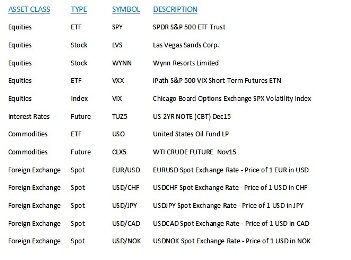
  • Portfolio Overlay – Two Inexpensive Ways to Add Downside Convexity
  • New Trade – Short 2-Year US Treasuries via Put Options

For those of you who still have to make up your mind on whether we can help you or not with your daily investment process, today’s edition of Sight Beyond Sight is a good example of what makes us different.  The majority of the morning notes you have received today all center on the “bad news is now good news” meme or how lower interest rates for longer will be supportive for risk assets. Of course, none of them have highlighted that financial conditions have been tightening all year long so despite the call for lower interest rates for longer the real world is not buying that unless credit spreads tighten. Instead, we will give you a rareview into how risk takers are faring across various strategies. Additionally, we provide three new trade ideas.

Neil Azous, Rareview Macro

In the 1977 iconic movie Star Wars: Episode IV-A New Hope, following the scene where the Death Star destroys the planet Alderaan, the Jedi Knight, Obi-Wan Kenobi, said: “I felt a great disturbance in the Force, as if millions of voices suddenly cried out in terror and were suddenly silenced. I fear something terrible has happened.”

I have started with that quote because it seems the best way to describe the Start of the new week for the professional investment community. Take a look at the below observations and it will be easier to understand why risk takers are “crying out in terror” and for many of them “something terrible has happened”.

If you are a global macro fund, then liquidity is not going to be your friend today as you defend core strategies that are deeply entrenched. For those who have been living on a deserted island the remaining long US dollar positioning is mostly versus emerging market FX and G10 commodity currencies, rather than other reserve currencies such as the euro, Japanese yen, Pound sterling, and the Swiss franc.

If you are a long/short strategy, you already know what is happening because it started well over a week ago.

You just did not want to believe it. Not to worry, a further unwinding in the long Financial/healthcare versus short Material/Energy sector strategy will help you finally come to grips with reality. If you are a quantitative fund, up until really last Friday in both Europe and the US, you have had the benefit of being part of the number one factor input and best performing strategy this year –that is, MOMENTUM. Sadly for you, the reversal of that strategy is a lot more violent on the way out then chasing it on the way in. Perhaps you will take back your 15 minutes of old fame from the new guys-Risk Parity and Target Volatility funds?

The conclusion would be that the worst-of-the-worst–energy, materials and bottom 15% of single stock performers–is now in play from the long side for whatever reason –its “go time”, crude oil has bottomed, or gross exposure reduction is not near being completed.rareview macro sight beyond sight 0c5 5 2015

Ok, here we go…

Rareview Macro Portfolio Overlay –Two Inexpensive Ways to Add Downside Convexity

The current price in S&P 500 futures is ~1950. The low on August 24th was 1831. The difference between the two is ~6%.Protecting against a 6% downside move, or 120 S&P 500 points, is an expensive exercise right now, and not one we are interested in. Instead, we are more worried about the second 6%, or the move down to 1720-1700 from 1831, especially the air pocket that is likely to develop once/if the August 24th intra-day low of 1831 is breached.

The problem is that we do not know the short-term direction of the S&P 500 index, including if it will first go to 2000 in the next 30-days but we are highly sensitive to an even larger move on the downside in the fourth quarter than what occurred in the third quarter. So working on these premises, what are the best strategies to deploy right now? We think having a two-tiered approach between the S&P 500 index and equity volatility, as measured by the CBOE VIX Index, is an optimal strategy.

We’ll look to dynamically manage both of these strategies side-by-side in the event that we see another leg lower in US equities. The two strategies we like are and the ones we deployed in the model portfolio late last week and posted via Twitter are…. Continue reading

Corporate Bond Market-Balancing on a Knife Edge

MarketsMuse Fixed Income Update “Corporate Bond Market- Balancing on a Knife Edge” is courtesy of extract from the 10.02.15 weekend edition of “Quigley’s Corner”, a daily synopsis of the investment grade corporate bond market and rates trading space authored by Ron Quigley, Managing Director of investment bank and institutional brokerage Mischler Financial Group, the financial industry’s oldest and largest minority brokerdealer owned and operated by service-disabled military veterans. Mischler Financial was selected in 2014 and again in 2015 for the Wall Street Letter Award “Best Research-Brokerdealer”

Ron Quigley, Mgn.Dir. Mischler Financial Group

Blackouts couldn’t be more optimally timed as we experience massive re-pricing in our IG primary credit market.  The corporate black-outs are serving as an unplanned, well-timed inherently built-in “kick-the-can” that is necessary in helping us to all buy time as we navigate thru what is perhaps the most unpredictable, treacherous, volatile and uncertain time that our primary markets have experienced since 2008.  As one very senior syndicate source told me “the credit markets are sitting on a knife’s edge.” IG spreads are on the whole 44 bps wider at the end of the third quarter according to Morgan Stanley.

Today’s notoriously and unexpected poor employment data was the last thing credit markets needed and it has instigated a massive Treasury rally. Perhaps this is a bit of good news because when both are combined, is a potential high velocity tailwind to credit products from big government bond funds.  However, that’s “if” funds want to own credit product and hold it for an extended period of time and potentially wear a negative mark-to-market.

Having said that, the guy-in-the-corner suggests that at some point this weekend, you should put on your favorite song and sing along to it after many shots of tequila.  When you get to the point of feeling bad, look at yourself in a mirror and realize that you can begin to feel better with coffee, food, sleep and time but come Monday morning the business model you are used to is about to change.  Not adapt; not get better; rather change. The trends in the credit markets that we have seen over the last two quarters are showing no signs of abating, and in some degrees, worsening.

Now please let me introduce the moment you’ve been waiting for..

Syndicate Forecasts and Sound Bites from “The Best and the Brightest!”   

I am happy to report that once again the “QC” received unanimous participation from all 23 syndicate desks surveyed in today’s Best & Brightest polling.  That includes all of the top 22 ranked syndicate desks according to Bloomberg’s U.S. IG U.S. Investment Grade Corporate Bond underwriting league table that can be found on your terminals at “LEAG” + [GO] after which you select #201 (US Investment Grade Corporates).  Their cumulative underwriting percentage is 94.00% of YTD IG dollar debt underwriting which simply means they’re the ones with visibility.  But it’s not only about their volume forecasts, rather it’s also about their comments!  This core syndicate group does it best; they know best; so they’re the ones you WANT and NEED to hear from. 

*Please note that these are Investment Grade Corporates only. They do not include SSA issuance unless otherwise noted.

The question posed to the “Best and the Brightest” early this morning was:

“Good morning! So, this week the massive repricing in primary markets saw average NICs bust out to 54.23 bps; bid-to-covers shrank to an average 2.02x; today’s numbers were BAD; Obamanomics is quite the engine of growth and job creation, China’s slowdown is showing up in our data (ISM Milwaukee posted its worst manufacturing number since the dot com bubble). Spreads are wider on today’s data to start. Lower-for-longer might just be lower forever!  The two-part question for today is what are your volume forecasts for IG Corporate supply for BOTH next week AND October?  It’s going to be challenging to nail that down but it’s an important survey at this critical juncture.  Many thanks, Ron” 

……and here are their formidable responses: Continue reading

BATS Exchange Goes Bats Again;Pay For Orders, Now Pay For ETF Issuer Listings

MarketsMuse ETF Curators debated on the title to this story, and first suggested the headline “Has BATS Gone Bats?!” While market structure experts continue to debate the topic of pay-to-play, i.e. payment for order flow schemes, BATS Global Markets, the youngest and arguably, now one of the largest electronic exchanges in the global marketplace based on trade volume across equities, ETFs and options is proving again Donald Trump’s moto: “Controversy Sells!”

According to the firm’s announcement last night, BATS is upending the traditional fee model for companies to list on an exchange-one that had Issuers paying the Exchange for the privilege of listing the company’s securities in consideration for the respective exchange’s brand integrity and financial ecosystem integrity. Instead, BATS, in effort to capture a lead role in the Exchange-Traded Fund space is now offering to reverse the business model and will pay ETF Issuers to list their products on the BATS exchange platform.

The way in which ETF products trade has recently come under close scrutiny by market regulators and institutional investors in the wake of both disconnected NAV prices of the cash product v. the underlying constituents during volatile periods and in connection with leveraged ETF products performing in unanticipated ways v. the way in which respective marketing materials proclaim those products can be expected to perform.

As noted in today’s WSJ story by Bradley Hope and Leslie Josephs..

The Lenexa, Kan.-based exchange operator on Thursday plans to launch what it calls the BATS ETF Marketplace, which will pay ETF providers as much as $400,000 a year to list on BATS. Payments will vary depending on average daily volume.

Traditionally, ETF providers have paid between $5,000 and $55,000 a year to list on a stock exchange. BATS previously offered firms the option to list on its exchange for free. Besides the monetary incentive, the marketplace is also changing the way it rewards market makers for continuously offering to buy or sell ETFs, a move it said will help reduce volatility.

“We are redefining the relationship between ETF sponsors, investors and market makers,” CEO Chris Concannon said in an interview.

ETFs have come under greater scrutiny after they faced trading issues on Aug. 24, including prices of ETFs being far out of whack compared with the prices of the underlying holdings. Exchanges, market makers and ETF sponsor firms are in discussions about how to make wider changes to rules to help prevent similar problems from happening.

“August 24 obviously makes us go back and say: ‘Are our decisions the right ones?’ ” said William Belden, managing director of ETF strategies at Guggenheim Investments LLC.

For the full coverage from the WSJ, please click here

How Savvy Hedge Funds Exploit ETF Products-Supposedly

While equities markets have zig-zagged since late summer with lots of volatility,  leading to pretty much no change in major indices since late August, news media outlets have put their cross hairs on the ETF industry, which has been battered with criticism consequent to out-0f-context pricing that has riddled opening bell markets during recent spikes in volatility.  CNBC pundits have invited an assortment of geniuses to explain, defend or attack ETFs for days, including 30 minutes dedicated to the topic mid-day yesterday.  The industry print publications have been repurposing each other’s copy with similar themes for days, and the SEC and other alphabet agencies are purportedly ‘investigating’ the ETF industry as a consequence of the recent disruptions.

For equities market experts who are fluent in exchange-traded funds, which are nothing more placeholders for bespoke basket trading strategies–you know that the notion of disruptions in pricing of the cash product aka the ETF could easily happen whenever there is a dislocation in the underlying constituents. Its a caveat emptor type of product. But, somehow, this simple concept has been lost on everyone, except of course by ‘savvy hedge fund managers’..and what a surprise, one HF name now being mentioned for exploiting ETF products is none other than Steve Cohen.

Here’s an excerpt from today’s WSJ “Traders Seek Ways to Benefit From ETFs’ Woes…In some cases, gains come at expense of individual investors”….–which is arguably best suited for college freshman taking elementary classes. According to one trader interviewed by the MarketsMuse Curator, “If there is any SEC-certified RIA or any institutional investor who doesn’t understand this product and the related nuances [and believes the WSJ article was informative], your license should be stripped.”

Here’s an excerpt from today’s WSJ story by Rob Copeland and Bradley Hope Continue reading

Is London the New FinTech Capital? Cheers!

The FinTech aka financial technology revolution continues to advance across the financial industry landscape, as dozens of startups from block chain to bond trading initiatives work towards securing a presence within the institutional financial services ecosystem. And, as profiled in a brilliant column this week from Institutional Investor spotlighted by MarketsMuse tech talk curators, the City of London is quickly carving out a leading role for being Europe’s epicenter for incubating the next greatest applications. The question now is, “How soon will London’s Silicon Roundabout squeeze out Silicon Alley and Silicon Valley?”

The excerpt from II’s Charles Wallace latest report, “FinTech Startups Flock to London’s Silicon Roundabout” is below. A link to the entire article follows accordingly.

Raja-Palaniappan
Raja-Palaniappan

Raja Palaniappan worked at Credit Suisse in London as a bond trader for a number of years before deciding to go out on his own and launch an online marketplace called Origin Markets, which seeks to revolutionize private placement bond issuance by eliminating intermediaries like Goldman Sachs Group. Although American by nationality, Palaniappan decided to open his platform in London because he felt the city offered greater opportunity than New York or Silicon Valley for a new financial technology, or fintech, company (see “ Former Trader Raja Palaniappan Sees Fintech Opportunity in Bonds”).

“London does have a competitive advantage in fintech because you’ve got technology in Old Street and finance on Liverpool Street and they’re about three quarters of a mile apart,” Palaniappan says, referring to two areas of the City of London financial district. “In the U.S. technology lives on the Left Coast and finance on the Right Coast, and there’s little consolidation between the two.”

According to consulting firm Accenture, Europe is the world’s fastest-growing area for fintech funding, with spending rising 215 percent last year, to $1.48 billion. London had the largest share of that investment, some £342 million ($530 million), according to London & Partners, a government-funded agency supporting the London economy. Although the U.S. continues to lead overall fintech funding, with $2 billion in 2014, much of that was Silicon Valley–based investment in business-­to-consumer start-ups like Lending­Tree, an online exchange that connects consumers with lenders; in London much of the activity is targeted at institutional financial services such as banking, insurance, trading and asset management.

“Since the Industrial Revolution, London has been the center for international commerce, and the melting pot that you have in terms of people and talent is pretty unique in the world,” says Sean Park, a Canadian who runs Anthemis Group, a firm that advises and invests in fintech start-ups from offices near Oxford Circus in Soho.

London’s growth as a fintech hub is not exactly surprising. The city is the world’s leading center for international wholesale financial services. It boasts more banks than Hong Kong or New York, leads the world in foreign exchange trading, has vibrant asset management and insurance sectors, and is home to the Eurobond market. In addition, fintech enjoys strong support from the British government, which sees the financial services sector as essential to the health of U.K. Plc and technology as critical to maintaining London’s competitive edge. Financial services employ some 2 million people, or about 7 percent of the country’s workforce, and generate 10 percent of the U.K.’s gross domestic product. Continue reading

Why Glencore is Going to Cause Gas- A Global Macro View-Grab The Glenlivet

MarketsMuse news curators have spotted dozens of commentaries from leading equities and debt market pundits opining about global mining giant Glencore. There is only one comment that offered a truly rare view that struck a chord, and it is courtesy of this morning’s edition of global macro newsletter “Sight Beyond Sight”, which is published by global macro think tank Rareview Macro LLC. The title of today’s edition:

Tentacles from Glencore Extend Well Beyond the Naked Eye…Quarter-End Flight to Quality

Neil Azous, Rareview Macro

Today’s edition of Sight Beyond Sight is going to sound aggressively Bearish to some people. At the same time, the tone is insensitive to the countries, companies, and employees involved. If that bothers you, that is too bad. This is a financial services newsletter, not the United Nations or the Red Cross. We are not trying to disparage anyone or call someone out. Our goal is to try and help you make or save money.

When I traded credit derivatives at Goldman Sachs back in the late 1990’s, the way we separated our bond business between investment grade, high yield and distressed was very simple. If an issuer’s bond price was trading above 80 cents on the dollar you were investment grade. Conversely, if an issuer’s bond price was trading below 80 cents on the dollar you were high yield. Anything below 50 cents on the dollar, you were distressed. Below 20 cents…don’t ask.

Glencore EU1.25b notes due March 2021, one of the most recently issued and liquid tranches of their debt outstanding, dropped six cents to~76 cents on the euro today, effectively crossing over into high yield territory even though it still maintains its BBB credit rating. Headline writers argue that most of the weakness today in Glencore’s stock and bond price is the result of comments made by Investec Plc, where it warned that there would be little value for shareholders should low commodity prices persist. This echoes a key research note last week from Goldman Sachs that said: “If commodity prices were to fall 5% from current levels–which we do not consider to be a far-fetched assumption given the downside risk to commodity consumption in China–we believe that concerns about its IG credit rating would quickly resurface.

Under this scenario, we estimate that most of Glencore’s credit rating metrics would fall well outside the required ranges to maintain its IG rating, and that could happen as early as the next reporting period (FY15).”

From here, this is where those who throw bombs for a living believe is what is coming up next:

  1. Commodity prices drop another 5%;
  2. Rating agencies downgrade Glencore to high yield

(by Friday);

  1. Glencore’s trading desk receives margin/collateral call immediately as commodities are T+0 settlement for margin (i.e. remember Duke&Duke in Trading Places);
  2. Like AIG, the re-insurer of the credit markets, a significant amount of derivative contracts tied to commodities become an unknown.

Continue reading

ProShares’ Burger King Idea: “Ex-Sector” ETF Menu

Hold the pickles, and hold the lettuce…Just when MarketsMuse curators and an assortment of ETF market enthusiasts thought there might already be enough themes, toppings and twists to the growing number of exchange-traded funds, ProShares is taking a page straight out of Burger King’s 1970’s branding campaign via a newly-launched menu of “ex-sector ETFs.”  The new, S&P-centric menu enables investors to have it their way and to express bets in the S&P 500, but “ex” specific sub sectors. Confused as to why? According to a report by CNBC’s Alex Rosenberg, so are select industry professionals who view this innovation as convoluted. Below is an excerpt from Rosenberg’s juicy bytes..

proshares bk have it your wayA new set of exchange-traded funds offered by ProShares allows investors to get exposure to the entire S&P 500, save for one or another given sector. Specifically, the company now offers ETFs tracking the S&P 500 ex-energy (trading under the ticker symbol SPXE), ex-financials (SPXN), ex-health care (SPXV) and ex-technology (SPXT).

In a Thursday interview with CNBC’s “Trading Nation,” ProShares’ head of investment strategy, Simeon Hyman, highlighted two anticipated uses for the ETFs: diversification and tactical decision-making.

Hyman provides the example of an investor who already has high exposure to a given sector—such as an executive compensated in a company’s stock, or an inheritor who has received a large number of shares—and does not want to take on excess exposure.

“Previously you’d have to maybe call up a trust company or find someone to run a custom strategy for you to avoid that sector, and here it’s just very straightforward: Buy an ETF. The sector’s out, it’s redistributed across the other names on a market-cap-weighted basis, you don’t have to worry about it,” Hyman said.

Second, the ETFs are designed for those who believe a given sector, such as energy, is set to underperform the rest of the market. “If you have that conviction, this is a very straightforward and easy way to effect that view,” he said.

Yet given that retail investors are often considered to be best served by buying into the overall market and avoiding tactical calls, some say these ETFs might be an inferior play compared to, say, SPDR’s popular S&P 500 ETF (SPY).

“As a core holding, you are far less diversified,” Eric Mustin, vice president of ETF trading solutions at WallachBeth Capital, wrote to CNBC. “You are implicitly overweight the other sectors versus the S&P 500 weightings.” The expense ratio, at 0.27 percent, also irks Mustin.

“You are paying nearly 200 percent to 300 percent the management fees” compared to a product like the (SPY), he pointed out. “I think it’s a product that may find some success among a retail audience, but sophisticated investors probably won’t have an appetite for it.”

When there is a “pronounced discrepancy in attractiveness,” such as the clear unattractiveness of energy at the beginning of the year given dismal earnings expectations and high valuations, “it would seem logical to exclude that sector,” S&P Capital IQ’s equity chief investment officer, Erin Gibbs, wrote to CNBC.

“However, these clear-cut unattractive sector events do not happen that often, and therefore these products could have limited appeal,” she added. Here’s what Hyman has to say:

And, as a special treat to MarketsMuse readers who are “of age”, here’s a dandy clip that adds flavor to this story:

Watch Out Wall Street-The Big Short is Coming

For Wall Street bankers and brokers who have been in the business since at least the early 2000’s and are still working on the Street, and who think you’ve already been pilloried plenty for the work you do, watch out, former Lehman broker-turned best-selling author Michael Lewis (“Liar’s Poker“, “Money Ball“, “Flash Boys“) isn’t finished with you just yet.

The film adaption of Lewis’s 2010 best selling book, “The Big Short: Inside the Doomsday Machine,” a story that seeks to encapsulate the Wall Street culture and practices that some (not all) believe were responsible for the 2008 financial crisis, is coming to a theater near you.

Starring Christian Bale, Steve Carell, Ryan Gosling and Brad Pitt,  MarketsMuse movie critic has eyes on the December 2015 Netflix schedule, only because we thinketh this movie might be a prime candidate for dual-listing in order to hedge against lots of competition during the movie industry’s peak selling season.

Global Macro-Contrarian Says: Laundry List for Long European Equities

MarketsMuse Global Macro curators always look for substantive and objective observations from outlets that are truly substantial within the context of presenting thoughts and comments from experts followed by the most discerning investors. With that in mind, we salute the folks at UK-based Substantive Research for this morning’s note, which includes the following kudos to a global macro pundit who MarketsMuse takes credit for spotlighting early on….

Giving up on the European recovery theme?

Neil Azous from Rareview Macro published a great note that encapsulates a couple of big themes; Inflation targeting by central banks, and the impact of QE on equity markets, and in particular, European equities. There’s a big question about the relevancy of inflation targeting in today’s central bank user manual and Rearview has neatly put together a collection of quotes and academic work from central banks on this. with their own take on what this might mean for policy making in the future. How does this relate to European equities? If inflation targeting is no longer an effective policy tool it certainly limits policy options for the ECB. Azous also notes that European equities haven’t had the same tail winds that the US and Japan markets have had whether that is the direct result of QE policy, or corporate actions. This ”underperformance” shouldn’t signal less faith in the European recovery story, and he produces a laundry list of reasons to back the view for being long european equities here.

Robo Adviser Beat:Betterment Claims Better ETF Construct for 401ks

MarketsMuse curators note that “there is always a better way, until its not better. ..”But that isn’t stopping Betterment LLC, the startup robo-adviser that claims to offer a solution for investors who seek an automated approach to stuff ETFs into their401k portfolios.

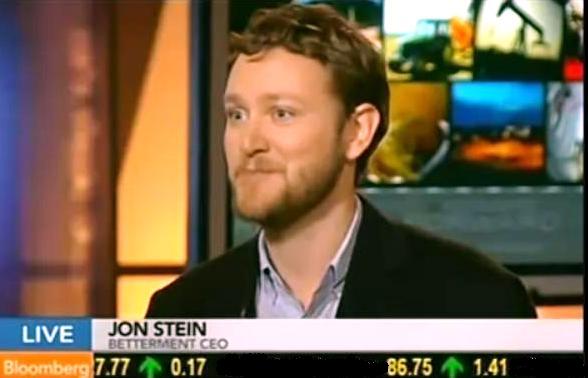
Betterment, a leading robo-adviser, announced last week that it will launch a 401(k) platform for employers starting early next year. Portfolios will be made up of exchange-traded funds.

Jon Stein, Bettterment CEO

According to Betterment CEO Jon Stein.. “Current 401(k) offerings—and we have examined them all—have poor user experiences, high costs, and a clear lack of advice. Not anymore. Betterment for Business will bring our smarter technology to the workplace and the millions of Americans who badly need it to meet their retirement needs. “It’s time that all Americans have low-cost, unconflicted advice and smarter technology for retirement planning.”

Betterment says it currently has 100,000 retail customers and $2.6 billion in assets under management in its diversified mix of exchange-traded funds.

Fast-growing ETFs remain a tiny part of the 401(k) market. Anne Tergesen at The Wall Street Journal notes that two key benefits of owning ETFs — intraday trading and tax-efficiency — are sound much less exciting in reference to 401(k)s:

“A couple of ETFs’ biggest selling points don’t give them an edge in the 401(k) market. ETFs trade all day long like stocks, but that typically isn’t a feature that employers want to offer in retirement plans. Employers want employees “to take a long-term perspective—not to be day trading,” Ms. Lucas said.  “ETFs are also tax-efficient, but that doesn’t matter in tax-sheltered retirement plans,” said Brooks Herman, head of data and research at BrightScope.”

In offering an ETF-only menu for its 401(k), Betterment joins Charles Schwab Corp. , which last year launched an all-ETF version of its Index Advantage 401(k) platform. Other companies that offer ETFs within 401(k) plans include Vanguard Group and Capital One Financial Corp.’s ShareBuilder 401(k).

For the full story from the WSJ, please click here

Rupert Murdoch Takes On Bloomberg-Symphony Sings

BrokerDealer-Banked Chat Service Symphony Signs Pact to Sing News from Dow Jones and WSJ

MarketsMuse Fintech editors are observing Rosh Hashana today, and we thank our friends at BrokerDealer.com blog for the following story..which could set the tone for a slug fest between Rupert Murdoch of News Corp. and Michael Bloomberg, the iconic founder of Bloomberg LP and 3-time major of New York City.

With merely a few days in advance of its launch, Symphony Communications, the instant-message platform backed by a consortium of Wall Street’s biggest brokerdealers and whose strategy is to undercut the seemingly irreplaceable Bloomberg-powered IM, announced that it has inked a deal with Dow Jones & Co to feed streaming News Corp.-owned Dow Jones News and Wall Street Journal content into the Bloomberg-killer service.

BrokerDealer.com is the host to the financial industry’s most comprehensive database of broker-dealers and provides information on brokerdealers across more than 30 countries worldwide.

According to the latest WSJ coverage, Symphony has won backing on Wall Street because it has been viewed as a potential lower cost alternative to a popular messaging service on Bloomberg LP’s terminals. The company has also made its encryption technology a key selling point for financial firms wary about sensitive data falling into the wrong hands.

The Palo Alto, Calif., company has secured $66 million in financing from 14 firms including Goldman Sachs Group Inc., Morgan Stanley, J.P. Morgan Chase & Co. and BlackRock Inc.

ETF Sec Lending: Red Flags Being Raised

Sec Lending is a big business for Wall Street and through the big banks, institutional investors are lending out more bonds and accepting increasing amounts of non-cash securities — including exchange traded funds — as collateral, according to a recent report spotlighted by MarketsMuse editors courtesy of a.m. story from FT.com. But the practice is raising concerns among some investors some of whom are particularly concerned about the practice of ETFs accepting other ETFs as collateral.

The trends for more bond lending and less cash collateral were picked up in the latest report from the International Securities Lending Association (ISLA), published on August 27. It said the €1.8tn securities lending industry had continued to move towards sovereign debt, with 39 per cent of securities on loan being made up of government debt, up from 35 per cent a year earlier. Of the €718bn worth of government bonds on loan, 72 per cent is taken in return for non-cash collateral, up from 61 per cent 12 months before.

Among those institutions feeding the increased desire to borrow securities is iShares, the world’s largest ETF provider in terms of assets under management, which is owned by BlackRock. It recently scrapped the 50 per cent limit on securities lending for ETFs domiciled in Europe that it had imposed in 2012.

In a statement published in July, iShares said it had decided to scrap the limit to “ensure clients can benefit from additional securities lending returns in funds where there is more borrowing demand”.

But scrutiny of just one US Treasuries ETF reveals some decisions — over collateral — that investors might find surprising. In the 12 months to the end of June 2015, the $1.8bn iShares $ Treasury Bond 7-10yr Ucits ETF (IBTM), had lent out on average 47.48 per cent of its assets under management, generating a 12 month return of 0.09 per cent.

iShares’ online information about this fund states that acceptable collateral includes “selected ETF units”, which last week included 10 iShares ETFs, including ones tracking US property and Chinese and Australian equities.

Andrew Jamieson, global head of broker dealer relationships for iShares, insists the policy of using ETFs as collateral is “nothing new” and that ETFs “are a viable and liquid collateral type as part of a broad range of assets that you can use”.

Ben Seager-Scott, director, investment strategy at Tilney Bestinvest, says he is “deeply concerned” by the securities lending programme at iShares and accused the provider of poor communication.

There’s no conflict of interest and there’s no cannibalisation

And Peter Sleep, senior portfolio manager at Seven Investment Management, questions iShares’ use of a Chinese equity ETF as collateral in a government bond fund. “What happens if you have a China ETF? Maybe it’s liquid, maybe it isn’t. What happens if China suspends trading on its stock market again?”

For the full story from FT.com, please click here

Investment Grade Credit Spreads Are Saying…MarketsMuse

Most sophisticated investors, whether Tier 1 institutional investment managers, ‘top minds’ across the sell-side, or the truly savvy, self-directed types should all agree that fixed income market signals, and investment grade credit spreads in particular are a prelude to what equities market can expect to happen.

Whether the ‘lag time’ is 3 months, 6 months or 9 months, history has proven that interest rate markets and investment credit spreads are a reliable indicator. Reading those ‘tea leaves’ is complex, and a task often relegated to “senior research analysts.”  That said, MarketsMuse followers  (primarily investment industry professionals who hail from both sides of the aisle) know that when it comes to truly superior research within the financial market ecosystem, finding diamonds in the rough is not easy, particularly when the landscape is a minefield of jibber jabber produced by ‘experts’ at top banks–folks whose interests are more often aligned with their own wallets as opposed to being aligned with their clients’ best interests.

Worse still, having access to understandable, plain-speak analysis from objective and un-conflicted (aka INDEPENDENT) research is a challenge, albeit the unbundling movement is helping to address that issue.  Without further ado, the MarketsMuse Fixed Income team is happy to share an ‘evergreen’ piece from one such highly-trained and completely conflict-free expert. You’ve seen the work from Neil Azous of Rareview Macro LLC here before and the banner of his publication “Sight Beyond Sight” speaks volumes.

Roll the tape….

A segment from our daily global macro newsletter, Sight Beyond Sight, written at the end of July – What Investment Grade Credit is Really Telling Us – made the cover of the back-to-school issue of the IRP Journal, a recently launched magazine that is digitally distributed to institutional investors and features current research from independent research providers (aka IRP’s). As our readership expands deeper into Asia we are pleased to have been selected to be on the cover by this Hong Kong-based publisher.

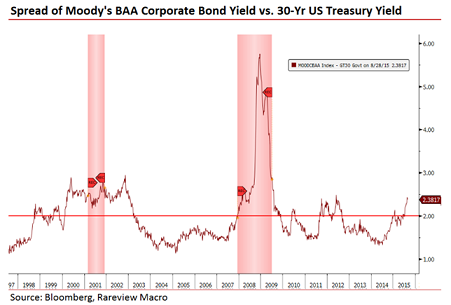
In the past few days, US investment grade (IG) credit spreads have reached new three year wides. Historically, the absolute level of these spreads is consistent with periods of economic and financial market stress. Additionally, the daily volatility of these spreads has increased dramatically in recent weeks.

Below is a chart of the Moody’s Baa Corporate Bond yield spread over the US 30-year Treasury yield.

what investment grade credit spreads are telling us marketsmuse neil azous rareview macro

What is the significance of this observation?

Investment grade corporate bonds are one of the least risky investments within the capital structure, and less sensitive to changes in default risk due to economic weakness. Moreover, the credit market is arguably, next to the slope of the yield curve, the greatest predictor of future economic stress.

The most widely cited explanation for the recent widening in spreads is that it is due to the amount of new investment grade credit issuance. Indeed, that is one factor as new issuance (+SSA) set a record pace yesterday after having surpassed $1 trillion, a level not reached last year until mid-September.

However, the recent widening of the spreads is not just down to the recent surge in corporate issuance. Issuance is simply not a large enough driving force to cause this level of “stress”. The reasons for this widening are two-fold.

Firstly, the aggregate level of issuance, to a degree, is beginning to finally catch up with the market after years of sensational appetite. Corporations, in aggregate, are raising their leverage levels by issuing the new debt and not using the proceeds to grow their revenues or cash flows to compensate. Put another way, the market is beginning to segregate between issuance related to refinancing a company’s “credit stack” as part of its normal annualized funding requirements and pure capital redeployment for the benefit investors.

By the way, not only is the IG spread widening, signaling the distinction noted above, but the equity markets are now doing so as well. See the below chart of the ratio of the S&P 500 to the S&P 500 BUYUP index overlaid with the US Treasury 5-30yr yield curve. Stock buy-backs are simply underperforming in 2015 after multiple years of out-performance as the yield curve steepens in anticipation that interest rate hikes will slow the capital redeployment process down. As a reminder, it is much easier to slow a buy-back than reduce a dividend as the former has a time-band and discretion to implement and the latter generally is a board-level decision.

Continue reading

Buyside Block Trading Venue Luminex Readies Launch

As if there were not enough electronic trading platforms,  the buyside remains determined to have their own equities trading platform open only to buy-side block trading peers. MarketsMuse Tech Talk Editors tip our hats to FierceFinanceIT.com  for the following update re  Luminex Trading & Analytics, the ATS block trading venue backed by a consortium of large asset managers, which recently announced an updated management team in preparation for the venue’s Q4 launch.

The new management team in place is led by Jonathan Clark, former managing director and head of U.S. equities trading a BlackRock, who will serve as Luminex Trading’s CEO. Clark replaces interim CEO Michael Cashel, who will return to his position as SVP of Fidelity Trading Ventures. Plans for Clark to take over as permanent CEO were previously announced, and as of Tuesday he has officially begun the role.

Plans to build the Luminex Trading venue, which is backed by nine leading investment managers that collectively manage approximately 40 percent of U.S. fund assets, were first announced in January.

The venue will be a buy-side only block trading platform “open to any investment manager primarily focused on the long term and with the desire to trade large blocks of stock with other investment managers,” according to an earlier announcement from the company. The nine investment managers in the consortium backing Luminex are BNY Mellon, BlackRock, Capital Group, Fidelity Investments, Invesco, JPMorgan Asset Management, MFS Investment Management, State Street Global Advisors and T. Rowe Price.

David Hagen, Luminex

Luminex Trading announced four other members of the management team this week. Brian Williamson will be head of sales, tasked with further building the client base. Williamson was previously senior global relationship manager with Liquidnet. James Dolan is chief compliance officer, joining the company from Fidelity, where he was previously vice president of compliance for Fidelity Institutional. David Hagen will head product development as Luminex Trading’s new head of product. He was previously director at Pico Quantitative Trading. David Consigli is the company’s new controller, joining from IDB Bank.

Luminex says its platform will offer investment managers lower-cost and more efficient block trading, with transparent trading rules and protocols.

Leveraged ETF, ETP and Risk-Parity Schemes: Caveat Emptor

In the wake of recent weeks’ volatility and pricing dislocations across the exchanged-traded product space, news media and Mutual Fund marketers are having a field day putting the feet to the fire–and those toes being torched are connected to the universe of juiced-up and levered ETF and ETN products, as well as hedge funds that specialise in so-called “risk-parity funds” that employ lots of leverage. Is it fair to bash these ‘alternative’ strategies, or should the SEC require that the prospectuses (or is it “prospecti”?) for these protein-enhanced products have a coverage page that displays Caveat Emptor in caps? For those not fluent in Latin, the phrase means: Buyer Beware.

NYT Dealbook columnist Landon Thomas Jr. poses that issue in his a.m. piece: “Investment Strategies Meant as Buffers to Volatility May Have Deepened It”–and before pointing MarketsMuse readers to that article, MarketsMuse editors remind our readers that ETF red flags are nothing new. Levered products, often in the form of ETNs (exchange-traded notes) that seek to either mitigate risk or enhance returns via the use of futures products are notorious for being fit for trading market professionals only; not retail investors and not even for so-called sophisticated institutional investment managers.

Corporate bond ETFs have also been put on ‘watch lists’ in recent months, even though they are all the rage for many of the right reasons, including offering exposure and ‘greater liquidity’ for those needing to allocate investment  funds to corporate debt issues across various industry sectors and ratings categories. That said, Apocalypse Watchers warn that when interest rates spike, corporate bond investors will all run for the exits together (to avoid mark-downs in their holdings) and the market-makers who specialize in ETF products connected to this asset class will be overwhelmed with nowhere to go–and no [reasonable] bid to offer to those sellers–simply because the glass-is-half-empty crowd contends those market-makers will be unable to find buyers for the underlying constituents as a means to hedge their purchase of the cash ETF product. That particular thesis has not yet been fully tested, but it does offer an agenda for spirited debate.

The Dealbook column does put context into the discussion with the following:

Defenders of risk-parity investing say that these investment styles are not set in stone and that portfolios can be recalibrated on fairly short notice to make them less vulnerable.

As for E.T.F.s, practitioners say that the funds to date have held their own despite some concerns over how portfolios were being valued during the very sharp market sell-off late last month.

Some of the more exotic E.T.F.s that rely on leverage to juice investment returns could in some instances be the “tail that wags the dog,” said Steven Schoenfeld, an early pioneer in E.T.F. investing and founder of BlueStar Global Investors.

“But the fundamental advantage of E.T.F.s — transparency, liquidity and variety — that remains,” he said.

What remains unclear, however, is how an investing community that has become accustomed to churning out safe and steady returns in a low interest rate, low volatility environment adapts to the new reality of wild market swings.

Such sharp ups and downs in the market are expected to become more frequent as the time approaches for the Federal Reserve to push interest rates higher.

People might as well get used to them, says Nicolas Just, a portfolio manager at Natixis Asset Management, a French fund company that oversees $904 billion in assets.

“These types of sudden market swings will become more and more frequent,” he said. “So you have to be prepared for them at any time.”

For the full story from the NY Times, click here