Archives: February , 2012

Social Media ETF: Is this a tipping point

In a Nov 15 story from CNN: the prospects for social media ETF “SOCL” were pretty much slammed.

“NEW YORK (CNNMoney) — A social media exchange-traded fund has made its debut, but experts say to hold off before you “like” and “+1″ it to share it with all of your friends.

While the Global X Social Media ETF (SOCL), which began trading Tuesday at $14.98 per share, includes buzzworthy initial public offerings Groupon (GRPN), LinkedIn (LNKD), and Pandora (P), it lacks the world’s two rock star social media platforms since they have yet to go public: Facebook and Twitter.

“ETF and mutual fund providers have a habit of launching funds that they think will collect money from investors, but not necessarily make money for investors,” said Rick Ferri, founder of Portfolio Solutions and author of The ETF Book. “And I think this might be one of those ETFs.”

That’s why Ferri and other experts are dismissing the investment value of the ETF, calling it “premature” and a “gimmick” that’s capitalizing on the popularity of social media companies even though their record of generating profits is erratic.

“I don’t think the firms in this ETF are great proxies for the potential performance of Facebook and Twitter, and I think investors will be disappointed,” said Christian Magoon, CEO of Magoon Capital and an ETF industry consultant…”

Fast-forward a few months, and the above observations are [arguably] still accurate, if only judging by today’s chart:

But that’s not the point of this particular post, particularly when considering this ETF is still in its infancy, and regardless of whether this publication agrees or disagrees with above-noted observations.

The more poignant point is the inroads that social media applications are making within the financial services ecosystem. We’ve commented on this topic in the past (and will continue to!)…but we wanted to share a nice video clip that we just tripped over, courtesy of InvestmentNews’ coverage of a recent TD Ameritrade Conference.

This is Not to promote TD (unless they want to sign up as an advertiser on this site), but the video clip is worth watching if you’re an RIA, a consultant, or even if you’re a broker dealer. More…

[brightcove vid=1450098930001&exp=1079049310&w=300&h=225]

ETF Transparency: Thinly-Traded Does Not Mean Illiquid-Says Leading ETF Issuer

Unbeknownst to too many who traffic in ETFs, the phrases “thinly-traded” and “illiquid” are far from synonymous.

Yes, of the now 1300+ exchange-traded funds, 2/3 of the total ETF trading volume is attributed to the top 25 “go-go names.” But, whether you’re an RIA, a corporate treasurer, a hedge fund manager, or a pension fund administrator, if your investment and/or trading decisions are predicated on what the “screen” displays, you’re not only foregoing investment opportunities that your peers are benefiting from, but you’re likely in the wrong business.

That’s the take-away from a solid white paper produced by a group that would know: Emerging Global Advisors LLC, one of the leading issuers of emerging market ETF products.

It takes more than moxy for a firm that feeds products into the exchange-traded marketplace to observe that trading screens (which aggregate bids and offers scrapped from the assortment of regulated exchanges) are often less than transparent.

To drive this point home, the white paper’s leading shout out: “The Screen Market is Not the Market.”

Continue reading

Four New Brent Crude ETPs

ETF Securities (ETFS) has expanded its Brent Crude exchange traded products offering against a background of rising geopolitical tensions in the Middle East.

The issuer unveiled four ETPs on the London Stock Exchange, as Brent Crude’s importance as the new global benchmark for oil rises. West Texas Intermediate has been beset with local logistical issues that have seen it move to a significant discount to Brent.

The range of ETPs provide investors with long, leveraged, short and forward exposures to the Brent oil price and complement its existing offering of 1-month, 1-year, 2-year and 3-year exposures.

In a recent poll by ETFS, three quarters of respondents said they expected tensions in the Middle East to escalate while two thirds said this would occur within the first half of this year. The vast majority of these respondents also said this would impact their asset allocation decisions.

The ETFS Brent Crude oil ETPs are issued by ETFS Commodity Securities Limited, a Jersey-based special purpose vehicle.

The vehicles track the performance of the Brent Crude sub-indices of the Dow Jones-UBS Commodity Index, via fully funded collateralised swaps.

Exposure to Brent Crude is obtained via multiple swap counterparties, including UBS and Bank of America Merrill Lynch acting through Merrill Lynch Commodities.

Despite Rally, US Market Lags List of 35 Best Global ETF Markets

We just scored the most recent trading desk comments courtesy of   WallachBeth Capital’s Chris Hempstead.

” Last week I took a look at YTD performance of the US Equity based ETF’s with exposure to the S&P sectors.

Today I would like to broaden that view and simply rank and look at the YTD top performing Equity based ETF’s globally.

What sparked my interest in creating this list was my curiosity to see how far down the list I needed to go before I found the top US Equity ETF. I wasn’t expecting it to be so far down the list, however I am not surprised that it was biotech for being the US market sector group which has been on the biggest tear in the US Continue reading

“Its Time To Hedge, Really!” Say Top Traders

Aside from all of the Squawk Box and Fast Money “professional traders” and “market experts” who have been on “high alert” [waiting for a correction] for the past several weeks, even the most blindsided bulls have to acknowledge that every nice move is followed by a pull  back.

When considering the past 3 months gains’ of 20% plus,  one doesn’t need to be a market historian to  know that 20% gains are soon followed by profit taking.  Tune in to this good piece.

Jon Najarian: Its Time For Protection

ProShares To Reverse-Split VIX ETF UVXY


Courtesy of IndexUniverse, reporting from Oliver Ludwig:

ProShares, the fund company known for its large family of inverse and leveraged ETFs, set a 1-for-6 reverse split on its now-super-popular VIX-related ETF “UVXY” to ensure that bid/ask spreads on the security don’t grow too large as a percentage of its declining share price.

The fund, the double-long ProShares Ultra VIX Short-Term Futures ETF (NYSEArca: UVXY), has been in the news since last week, when its popularity began soaring in the wake of Credit Suisse’s decision to halt creations of the VelocityShares Daily 2X VIX Short-Term ETN (NYSEArca: TVIX)—an exchange-traded note that delivers similar exposure to the VIX volatility curve as UVXY.

The decision to do a reverse split on UVXY isn’t related to the explosion of interest in the ETF, but is a function of the downward pressure on VIX futures over the past several months. UVXY was worth more than $34 a share when it came to market in October of last year, and it’s now trading at $5.60, according to Google Finance. It has lost more than half its value since the beginning of the year.

Even though UVXY often trades with a bid/ask spread of just 1 cent, that penny becomes a more conspicuous trading cost the cheaper the ETF becomes. The 1-for-6 reverse split, effective March 8 for shareholders of record as of the close on March 7, will pump up the share price about six times and cut the number of outstanding shares by about the same amount.

At today’s price, UVXY, now the only double-long exchange-traded product that’s taking in new money, would be worth more than $33 a share on a post-split basis. Continue reading

VIX Higher, SPX Higher; 30 Yr T touching 3 (percent)..Meaning??

Everything went higher today (despite the data during the last minutes into the close); stocks, bonds and fear; a somewhat unique combination of ups. When noticing today’s relatively rare direct correlation between equity market volatility (aka VIX), equity indices and “safe haven” US government bonds, option market veteran David Robbins of WallachBeth Capital says,  “The wall of worry is simply growing taller.” 

With the benchmark  barometers DJIA and SPX continuing to climb past technical and psychological barriers, and now only single digit percentage points away from all time market highs despite the still-fragile (albeit somewhat improving state of the US economy), “its always worth worrying” said Robbins, perhaps explaining the subliminal spikes noticed in outer-month VIX options, and in particular, put options.

Added Robbins, “The skew is always a good clue, and if you look at April and June VIX or VXX options, its clear that market pros are re-framing;  the risk of a market pull back increases each week the equities market goes up.  There’s always a black swan out there flapping its wings,  but its simply more expensive today to hedge that risk than it was last week.

BuyWriting Back in Vogue: Mutual Funds Warm To “CYA”

We all know that equity markets have been climbing the wall of worry for the past number of months. With both the Dow and S&P recovering to the sanguine levels not seen since the spring of 2008, covered call (buy-write) strategies within the mutual fund complex has until recently remained  a relatively untapped strategy, despite the time-tested success of many fund managers who have systematically used this style of hedged investing throughout both bull and bear market cycles.

But, “the tide seems to be turning,” according to recent coverage by Peter Chapman over at Traders Magazine, who spotlights a trend change in the course of his profiling the launch of two new covered-writing closed-end funds courtesy of Mario Gabelli’s GAMCO (” GAMCO Natural Resources, Gold & Income Trust”) and John Hancock’s  “Hedged Equity & Income Fund.” These are only two of the funds that are embracing a “CYA” strategy in the face of most market pundit predictions that the current upward trend is your friend, and should be expected to remain positive throughout the balance of 2012.

Whether the renewed interest in using the simplest of “hedging” strategies is attributable to percolating geopolitical concerns, or a need to enhance yield as interests rates continue to race to zero, or the growing consensus among market skeptics that what looks and sounds too good to be true often is (despite historical trends where markets typically rise into presidential elections), traders who have been around for more than 15 minutes  see the resurgence of institutional option-related strategies as an approach that simply makes sense.

Observed option market pro David Beth, the Pres/COO of  institutional options and ETF broker WallachBeth Capital, ” Its good [for investors] to have more options, no pun intended. The fund industry’s limited use of the most conservative option-related strategies has always been a “head-scratcher” for those who have lived through multiple market cycles over the years and always perceived that big funds are obliged to use conservative strategies.  Regardless of where one thinks the market is headed in the short or medium term, these new funds illustrate the growing recognition that systematic covered call writing can cushion downside exposure and enhance portfolio returns in both low-interest rate and stagnant market cycles; especially for funds with conservative mandates.” Continue reading

End of Week ETF Standouts – Closing Bell Friday Feb 24

The SPDR S&P Oil & Gas Equipment & Services ETF (XES) outperformed other ETFs this week, up about 4.4%. Components of that ETF showing particular strength this week include shares of Exterran Holdings (EXH), up about 19% and shares of Nabors Industries Limited (NBR), up about 10.8% on the week.

And underperforming other ETFs this week is the Solar Energy ETF (KWT), down about 5.9% this week. Among components of that ETF with the weakest showing for the week were shares of Yingli Green Energy Holding (YGE), lower by about 16%, and shares of Trina Solar Limited (TSL), lower by about 13.8% on the week.

Other ETF standouts this week include the Junior Gold Miners ETF (GDXJ), outperforming this week with a 4.1% gain. And the SPDR S&P Transportation ETF (XTN) was an underperformer, falling about 3.2% this week.

Expert ETF Trader: Liquidity Is There; Just Look Beyond the Screens

Other than the ETF market “go-go names”, one of the more commonly-voiced, and according to many, often-misguided observations regarding most ETFs is  “won’t trade it, there’s no liquidity in that name,”  or “the screens are only showing 1000 shares offered and I have to pay up 50 cents to buy a lousy 25,000 shares?!”

As a consequence, any half-smart portfolio manager often quickly (if not wrongly) concludes that the “lack of liquidity cost” is a deterrent to their positioning what is otherwise a very compelling “basket” of underlying securities.

The editors here don’t buy into the lack of liquidity notion, and after getting our hands on desk notes published today by Chris Hempstead, Head ETF Trader for WallachBeth Capital (one of the more prominent players in the ETF space), we couldn’t resist the opportunity to re-publish.

But wait, there’s more!

Tip-Toeing Into Social Media: Watch Wedbush

Whether you’re sitting inside a buy-side or a sell-side firm,  someone in your shop is talking about using social media. But, you’re compliance officer is saying  “Let’s let another shop experiment..we don’t need to be the SEC test case.”

Well, Wedbush Securities isn’t standing on ceremony. Just a few years shy of their 60th birthday, this “old-timer” isn’t letting legacy stand in its way, and is taking steps to leverage applications that have proven to change the course of history and  has launched a social media initiative offering employees a way to engage in social media conversations on platforms including Twitter, LinkedIn, and Facebook.

In an interview with Industry mag “MarketsMedia”,  Wedbush VP of Marketing Natalie Taylor said, “Through proper training and resources, we felt confident in our decision to allow our team to be ‘social’ and engage in organic communication.” But wait, there’s more!

2 More Studies Say: ETFs NOT to Blame for Market Volatility

Here’s a wake-up call to critics of the ETF world: two more unrelated and just-published research studies have acquitted the ETF industry of charges leveled by critics who have claimed ETFs are at the root of heightened market volatility.

In a newly-released report from the Investment Company Institute, which interrogated market volatility over the past 25 years, ICI’s experts (let’s presume their unbiased, OK?) concluded that ETFs have unfairly been cast as the dog wagging the tail, and accusations that “ETFs were the ‘match that ignited the Flash [Crash]’, or have in any other way been responsible for any unusual market volatility, are simply inaccurate and unjustified.

According to the report, “Heightened periods of volatility existed before ETFs (the most volatile during Black Monday ’87)”…more importantly,  “The market volatility that started before the financial crisis in mid-2007 and has continued through today has [simply] coincided with the rapid growth of the ETF market, as assets have grown from about $600 billion to more than $1 trillion.”  The report points out that “over the same time period, there was a prolonged global financial crisis that threatened to take down the international banking system and threw financial markets worldwide into turmoil.”

This report comes on the heels of a joint report issued by the SEC and the CFTC which determined that ETFs were not the cause of the May 2010 “Flash Crash”.  (Even if Editors here reserve comment on any potential conflicts these agencies might have), ICI’s report coincides with an earlier report study from Morningstar Inc., which investigated  and dismissed the notion that leveraged ETFs were causing increased turbulence late last year. The Morningstar report also pointed out that if leveraged ETFs were the cause of market volatility, the assets in the funds would rise and fall with volatility, but assets remained mostly steady from March 2009 to November 2011.

READ THE FULL STORY COURTESY OF INVESTMENT NEWS:

High Yield Bond ETFs: InFlows “Off the Wall”

In a column filed through SFGate, Bloomberg LP’s Joe Ciolli reports, “Junk Bond ETFs are drawing the biggest inflows on record from investors seeking easier access to higher-yielding assets. According to Lipper Analytics, ETFs that track junk-bond indexes have tapped $5.5 billion of investments since the beginning of this year, almost quadruple the $1.4billion during the same period of 2011.

While exchange-traded funds comprise 2 percent of the $1 trillion in U.S. corporate speculative-grade debt outstanding, they accounted for more than a third of the total $14.8 billion of inflows this year into mutual funds and ETFs that buy junk bonds.

The use of ETFs makes the market more efficient than investing in mutual funds because they trade throughout the day and give investors a “more appropriate way to tactically approach high-yield,” said Jeff Tjornehoj, head of Americas research at Denver-based Lipper, whose parent company, Thomson Reuters Corp., competes with Bloomberg LP for financial news and information.

Click here for the full story:

ETF Market’s “Dame Deborah” Fuhr Launches Independent Research Firm

Debbie Fuhr, the undisputed “Dame” of the exchange-traded-funds industry, and most recently BlackRock’s Managing Director and global head of ETF research and implementation will open the doors of a new independent research firm, “ETF Global Insight” next Monday. Prior to Debbie’s 3-year stint at BlackRock/BGI, she was billeted for 11 years at Morgan Stanley’s London barracks where she was an MD and head of that firm’s  investment strategies group.

photo courtesy of CNBC

As reported by a variety of global business news outlets, Debbie’s new domain “will publish research on the ETF industry as well as providing education and assistance with product comparisons and asset allocation implementation.”  Debbie will be joined in this new  London-based boutique by former co-workers Shane Kelly and Matthew Murray. All three are widely-credited for developing the first ETF industry research reports.

While speaking to FT.com reporter Chris Flood in discussing the new firm, Debbie stated, “All the members of the ETF eco-system have been citing the need for more and better independent education and research to help navigate the now vast array of products that are available.”

Observed  Andy McOrmond, co-head of ETF Trade Execution for institutional broker  WallachBeth Capital and a long-time industry associate of Ms. Fuhr,  “Debbie is an industry icon, and her new focus on providing an independent perspective on the broad array of ETF products will undoubtedly prove to be a bonus for those keeping their fingers on the pulse of the ETF market place.”


PIMCO Primes The Pump for Launch of ETF

Its countdown time for all of those following PIMCO’s entry into the ETF space; on March 1,  the House that Bill Gross Built is scheduled to debut The PIMCO Total Return Exchange-Traded Fund under the ticker TRXT. Those that click on the link to the fund will be able to review the entire prospectus.

According to Securities Technology Monitor reporter Tom Steinert, “This is akin to the day in 1981 when IBM blessed the desktop computer as a product worth buying into.”

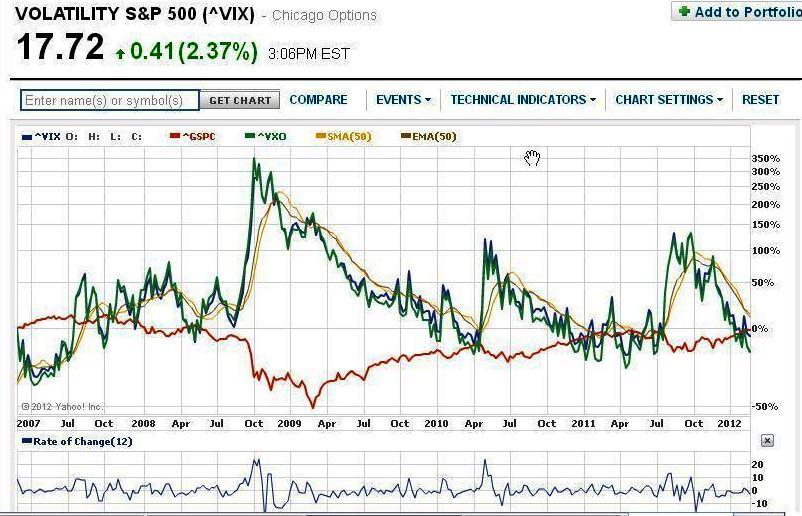
Because Gross is notorious for being an active manager (vs. passive), some industry observers fear that by virtue of PIMCO’s size,  this new ETF might somehow exacerbate the overall equity market volatility that some believe is attributable to ETFs in general. The editors here say “some people still believe the world is flat” and expert ETF traders that we’ve heard from dispel the notion that market volatility is attributable to ETF products.  Perhaps argument for the defense can be found simply by looking at the [declining] volatility over the past 3 months and the steadily increasing volumes in ETF products.

Alas, if only the SEC could see more clearly and recognize that its a handful of badly-designed apples in the ETF mix that are spoiling the reputation of the orchard.

Click on the STM logo above to read the entire story.

Amsterdam Hosting 3rd Annual InsideETFs Europe

Where’s a better place than Amsterdam for an International ETF conference in the month of May? Our global concierge says,  “No place compares to Amsterdam, for a variety of reasons!”

Which is exactly why IndexUniverse, the largest ETF conference producer, is once again hosting its “Annual InsideETFsEurope” for the third year in one of the most entertaining cities in all of Europe.

US-based ETF market players who have attended InsideETFsEurope in prior years will confirm this program is a  “great do” for those that want to refresh relationships and make new acquaintances with the growing number of European fund managers that are building out their ETF portfolios.

Observed upcoming attendee David Beth, President of NYC-based WallachBeth Capital, one of the “go-to” firms for those seeking ETF best execution in US ETF products, “Having recently formed an alliance with London’s NSBO to replicate our best execution model for Europe, this conference will provide a great opportunity for portfolio managers and head traders to better understand what we do, and how we do it with respect to capturing better price executions than they might ordinarily be accustomed to.”

Cheers to all..click on the conference logo to register and don’t forget to make your dinner reservations well in advance!

UK Wrap Platforms Wrapping Arms Around ETFs

As reported by FT.com, retail investors in the UK are rapidly wrapping their arms around ETF products, and platform providers are ramping up their offerings to facilitate the burgeoning growth in what is already a ubiquitous product in the US.

  According to the FT.com story, David Bower, head of iShares UK, said the ETF industry  would be a major beneficiary of RDR which will ban commission payments to financial advisers from the beginning of 2013. ETFs, unlike many other investment funds, do not pay commissions to advisers.

Mr Bower said the strong growth that iShares saw on wrap platforms in 2011 suggested that ETF usage amongst financial advisers and discretionary fund managers would continue to rise.

BlackRock saw assets held in iShares ETFs across six wrap platforms used by IFAs increase 34 per cent in 2011 to £746m at the end of December.

The six platforms are run by Ascentric, Novia, Nucleus, Raymond James, Standard Life and Transact.

Novia saw assets held in iShares ETFs increase 96 per cent last year while Ascentric reported an 88 per cent rise.

Paul Boston, sales and marketing director at Novia, said that ETFs were playing an increasingly important role in both advisory and discretionary portfolios on the Novia platform.

“This is proving to be a well-trodden investment strategy that significantly reduces the overall cost of a client’s portfolio,” Mr Boston said.

Further affirming this trend, UK-based institutional broker North Square Blue Oak (NSBO) has recently aligned with US-based ETF market expert WallachBeth Capital to form WallachBeth International, whose role, according to NSBO principal Laurie Pinto, “will include servicing institutional portfolio managers as well as leading wrap account administrators in the course of their securing best execution in a market place that is still catching up to the level of transparency that is available for US-centric ETF products.”

Added Pinto, whose firm is headquartered in London with an affiliate office in Beijing, “We certainly expect the demand for ETF products in the European market will emulate the growth trajectory which the US market has experienced over the past several years. To the extent that we can introduce best practices for true best execution, we believe we’ll be adding significant value to institutions that are utilizing these products.”

HFTs Hampering Trade in ETFs? SEC Wants to Know.

As reported by Reuters, U.S. securities regulators have widened their inquiry into the trillion-dollar market for exchange-traded funds, according to a person familiar with the matter.

Prompted by a delay in a big trade at a popular ETF, the U.S. Securities and Exchange Commission is taking a closer look at a possible connection between high-frequency traders and hedge funds jumping in and out of ETFs, and instances where ETF trades fail to settle on time, this person said.

The SEC’s inquiry is part of a wider probe that began last year and focused on complex ETFs that allow investors to magnify returns or bet against stock indexes.

U.S. and UK regulators are concerned that so-called settlement fails – when trades are not completed on time – could contribute to volatility and systemic risk in financial markets.

The probe’s main focus is on illiquid ETFs, but regulators are now also examining popular ETFs and failed trades, according to the person.

An SEC spokesman confirmed that the agency is looking into failed trades and ETFs, but declined to elaborate.

That said, the SEC might be barking up on the wrong tree, as many ETF experts discount criticism of the impact ETFs might have on trade settlement processes. In a recent report, State Street Corp, a Boston asset manager that created the first ETF in 1993, said that “short interest theoretically should have no impact on an ETF’s performance.”

ETF industry leaders say the data on ETF trade failures does not account for the fact that market-makers, the firms that do the bulk of ETF trading, have seven days to clear trades. The data assumes that all market participants must clear in four days, and any trade that settles later is counted as a failed trade by the National Securities Clearing Corp, a trade processing subsidiary of the Depository Trust & Clearing Corp.

READ THE ENTIRE STORY HERE